Jul
News
Solar Energy Savings: Smart Ways To Save Electricity Costs For Your Family
Are you tired of paying high electricity bills every month? Many homeowners are switching to solar panels to lower their monthly expenses. Understanding your potential solar energy savings is the first step before making the investment. At Solar Power Vietnam, we help you calculate costs and returns clearly. Let’s find out how much money you can look forward to saving.
How Do Solar Panels Save You Money?
Installing a solar power system is one of the most practical ways to reduce your family’s monthly living expenses. Instead of depending completely on the national power grid, your home can generate clean electricity on its own with three clear financial benefits:
Lower monthly electricity bills
The biggest change you will notice after installing solar panels is the reduction in your electricity bill. Normally, families have to buy 100% of their electricity from the national grid.
When switching to solar energy, the panels on your roof automatically absorb sunlight and convert it into electricity. During the daytime, your home will prioritize using this free solar power to run high-energy appliances such as air conditioners, refrigerators, fans, and washing machines. By reducing the amount of electricity purchased from the grid, you can directly save money with solar panels and see results from the very first month.
Protect your family from rising electricity prices
Grid electricity prices are not fixed and usually continue increasing every year because of inflation and higher fuel costs. Whenever electricity prices rise, your household expenses also increase significantly.
By generating electricity on your own roof, you create a financial shield against future price increases. Once the system is operating, the electricity produced during the daytime always has a fixed cost of zero, helping your family enjoy more stable living expenses.
Increase the real value of your home
A stable solar power system is also a major advantage that can increase property value. Today’s home buyers prefer houses with lower monthly operating and maintenance costs.
Homes equipped with high-quality solar panel systems are often more attractive and have higher resale value because future owners know they can save a large amount of money on electricity after moving in.
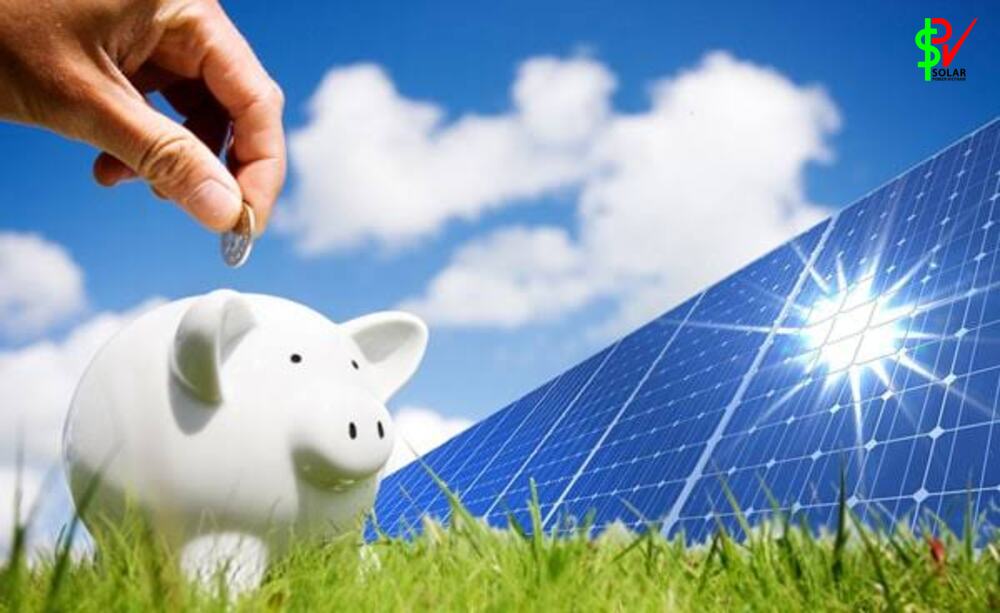
Solar Energy Savings
Is Solar Worth It? (Analyzing Your Solar ROI)
Many families still hesitate because the initial installation cost of a solar power system is relatively high. To answer the question “is solar worth it,” we need to look at this investment from a simple but accurate financial perspective called solar ROI (Return on Investment).
Understanding the payback period
The best way to evaluate the financial performance of a solar system is by calculating the payback period. This is the amount of time, measured in years, needed for your total electricity savings to equal the initial installation cost.
Simple payback formula
You can calculate the payback period for your home using the formula below:
Payback Period (Years) = Total Installation Cost / Annual Electricity Savings
Example: If the total installation cost of your solar system is 90 million VND and the system helps you save 10 million VND per year on electricity bills, then the payback period will be:
90,000,000 / 10,000,000 = 9 years
Real financial profit
Thanks to modern solar technology, the average payback period for households today is usually between 7 and 10 years.
After this payback period ends, the system will continue operating effectively. High-quality solar panels are designed to work reliably for 25 to 30 years. This means that during the next 15 to 20 years, all electricity generated by your roof becomes completely free profit for your family.
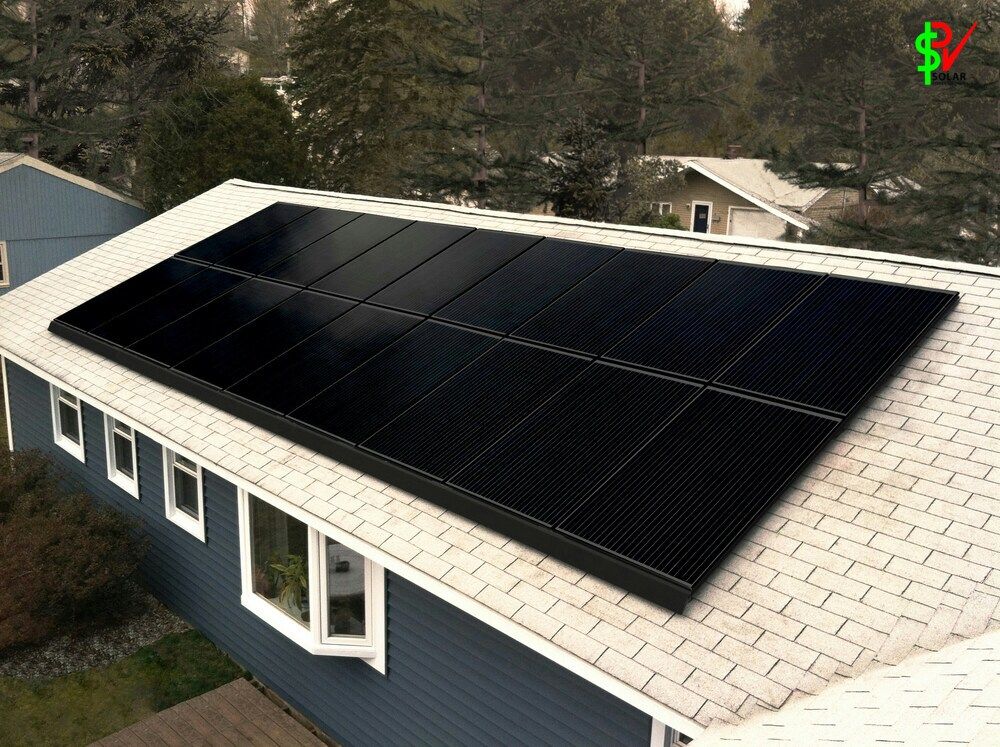
Analyzing Your Solar ROI
4 Key Factors That Affect Your Solar Power Savings
The amount of solar power savings each household receives will not be the same. Your savings depend mainly on the following four important factors:
Actual sunlight hours in your area
Solar panels need natural sunlight to generate electricity. Because of this, your geographic location strongly affects how much money you can save every month. Areas with high solar radiation and long sunny seasons – especially Central and Southern Vietnam – allow solar systems to generate more electricity and shorten the payback period significantly.
Roof direction and installation angle
The roof position and panel angle directly affect how much peak sunlight your system receives.
- Shade conditions: Your roof area should remain open and free from shadows caused by trees, electric poles, or nearby tall buildings.
- Roof direction: In Vietnam, the best roof direction for solar panels is South or Southeast because these directions receive the most sunlight from morning until late afternoon.
- Tilt angle: Panels should be installed at the correct technical angle to maximize sunlight absorption while allowing rainwater to naturally wash away dust and dirt from the glass surface.
Your family’s electricity usage habits
A standard solar system works most efficiently when it directly powers appliances during the daytime. If your family uses a large amount of electricity during sunny hours (from around 8 AM to 4 PM) – for example, homes with elderly family members, home offices, or small businesses – you will maximize the use of free solar electricity.
On the other hand, if your family mainly uses electricity at night, excess daytime solar power may be wasted unless you install a solar battery storage system.
Solar panel quality and efficiency
Solar panel technology and quality determine how effectively sunlight is converted into electricity. Choosing modern Monocrystalline solar panels from trusted brands can deliver much higher efficiency compared to older technologies.
High-quality panels not only produce more electricity from the same roof area, but also provide better durability, stronger weather resistance, and lower performance degradation after decades of operation.
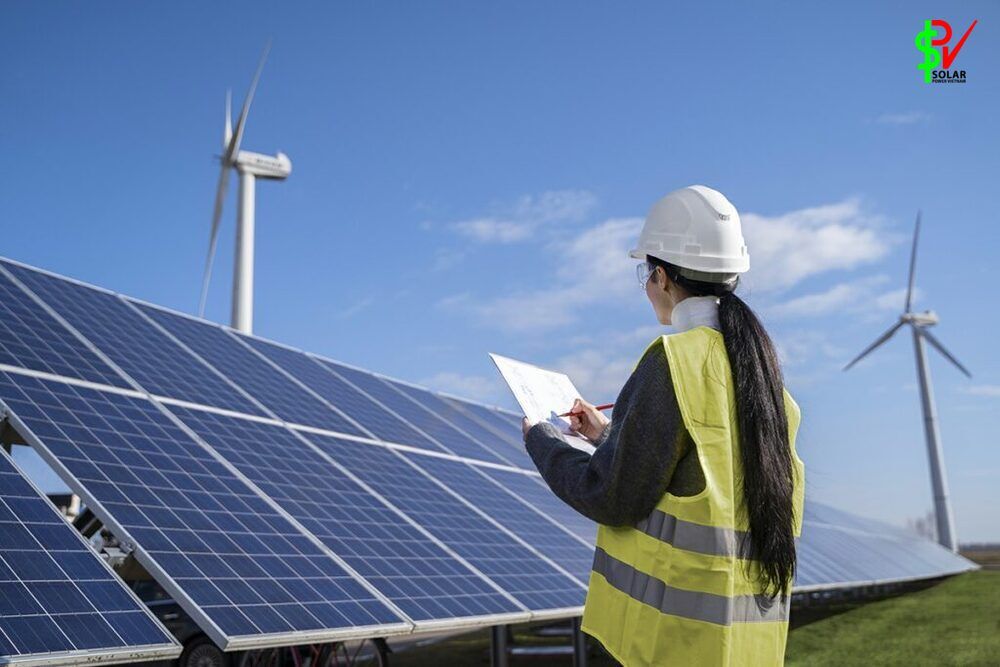
4 Key Factors That Affect Your Solar Power Savings
Step-by-Step: How to Start Saving with Solar
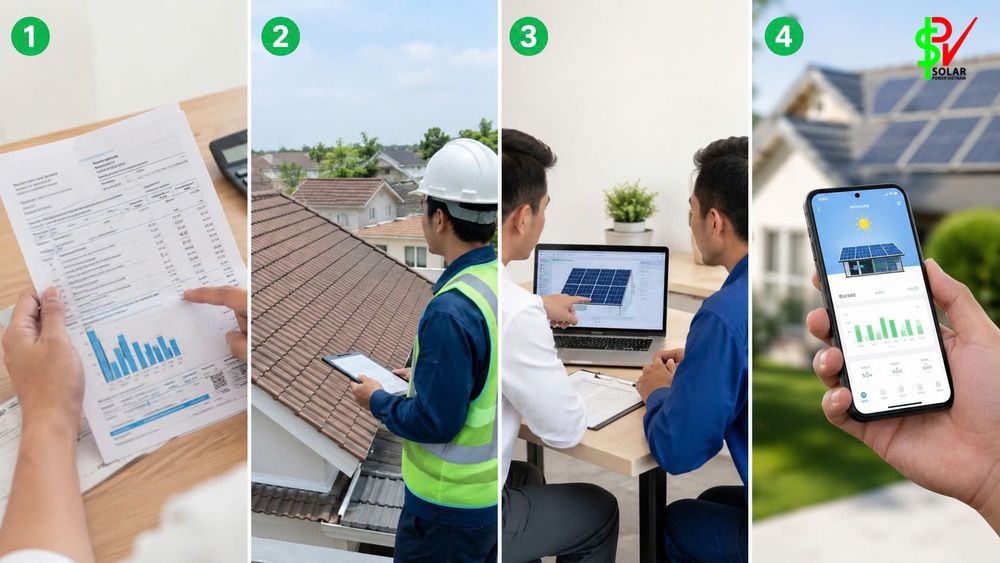
Switching to solar energy becomes very simple when you follow these four clear steps:
Step 1: Check your actual electricity usage
Before contacting an installer, collect your household electricity bills from the last six months. Look at the electricity consumption measured in kilowatt-hours (kWh). This average number helps determine the correct system size for your family.
Step 2: Inspect your roof area
Contact a trusted solar installation company to inspect your home. Engineers will check your roof structure, measure usable space, determine sunlight direction, and calculate whether nearby objects create shadows that may affect system performance.
Step 3: Design the right system size
Based on your electricity usage and roof inspection results, choose a system capacity that matches your actual needs. A system that is too small will not reduce your electricity bill effectively, while a system that is too large may increase your investment cost unnecessarily.
Step 4: Monitor performance and savings daily
After installation, you should install the manufacturer’s smart monitoring application on your mobile phone. This app connects directly to the inverter, allowing you to track daily electricity generation, monitor savings, and check the operating condition of the system anytime and anywhere.
Step-by-Step: How to Start Saving with Solar
Frequently Asked Questions (FAQ)
Question 1: Can solar panels still help me save money on cloudy or rainy days?
Answer: Yes. Solar panels absorb light particles, not heat, so the system still generates electricity on cloudy or rainy days. However, because sunlight intensity is weaker, electricity production may decrease by around 10% to 25% compared to bright sunny days.
Question 2: How long do solar panels actually last?
Answer: High-quality solar panels today are very durable and can operate reliably for 25 to 30 years. Since solar panels do not contain moving mechanical parts, system failures are very rare. After 25 years, the panels still work normally, although efficiency may decrease slightly by around 0.5% per year.
Question 3: How will my family use electricity at night when the system stops generating power?
Answer: At night, solar panels stop producing electricity completely. The system will automatically switch your home back to the national power grid smoothly. If you want to continue using solar electricity at night, you will need to install a solar battery storage system.
Question 4: Do I need to clean the solar panels regularly to maintain savings?
Answer: Solar panel maintenance is simple and requires little effort. In most cases, you only need to clean the panels one or two times per year to remove dust and leaves. In areas with regular rainfall, heavy rain can naturally wash away most dirt from the glass surface.
Question 5: Can solar energy reduce my electricity bill to zero?
Answer: Yes, this is possible if you install a very large solar system combined with high-capacity battery storage for nighttime use. However, for most normal households, reducing monthly electricity bills by 70% to 90% is considered the most practical and cost-effective solution.
Question 6: Will drilling and mounting the solar frame damage or leak my roof?
Answer: Not at all if you choose professional installers. Technicians use specialized mounting accessories and waterproof silicone sealing materials designed for each roof type. In fact, solar panels also act as a second protective layer that shields your roof from direct sunlight and heavy rain.
In summary, investing in solar energy is a smart financial decision that helps increase your long-term solar energy savings while protecting the environment around your home. A solar power system turns your monthly electricity bill into a valuable long-term asset installed directly on your roof. To achieve the best performance and solar ROI, the engineering team at Solar Power Vietnam is always ready to support you with professional consultation and system design.