Jul
News
Solar Panel Maintenance: The Easiest Guide To Cleaning And Maintaining Solar Panels
To keep a solar power system operating efficiently and producing the maximum amount of electricity, regular solar panel maintenance is extremely important. Many homeowners worry that the process may be complicated, but in reality, solar panels are highly durable and rarely experience technical problems. Understanding how to clean solar panels correctly helps prevent scratches on the protective glass and keeps the system working at peak performance. In addition, proper maintenance also directly affects how long solar panels last over many decades. Let Solar Power Vietnam guide you through simple inspection and cleaning steps below.
1. Why is regular solar panel maintenance important?
Solar panels are designed to stay outdoors all year round. Because of this, they are exposed to all kinds of weather conditions and environmental impacts. If you ignore the system for years without checking it, the performance will gradually decrease. Below are the 3 main reasons why regular maintenance is necessary:
Improve sunlight absorption efficiency
Solar panels generate electricity by absorbing sunlight through photovoltaic cells inside the panels. When dust, dry leaves, fine dirt, or bird droppings build up on the glass surface, they create “dark spots” that block sunlight.
According to energy engineers, these dirty layers can reduce electricity production by 10% to 20%. Cleaning the panels is similar to cleaning eyeglasses, helping the panels “see” sunlight clearly again and work efficiently immediately.
Detect physical and technical problems early
Regular inspections help you notice unusual issues that are often difficult to see normally. For example:
- Detects whether electrical wires under the panels have been damaged by rats or squirrels.
- Check the metal frame system to see if screws become loose or rusty after heavy storms.
- Look for cracked or broken panels caused by falling tree branches.
Finding these problems early helps technicians repair them before they damage the entire expensive system.
Ensure fire safety for your home
Solar energy systems operate with high electrical power and continuous DC current during the daytime. If electrical connections become loose, electrical boxes become wet, or wires are damaged, the risk of short circuits and sparks becomes much higher. Maintenance and inspection of electrical connections help ensure stable and safe operation, prevent electricity leakage, and protect your home from fire hazards.
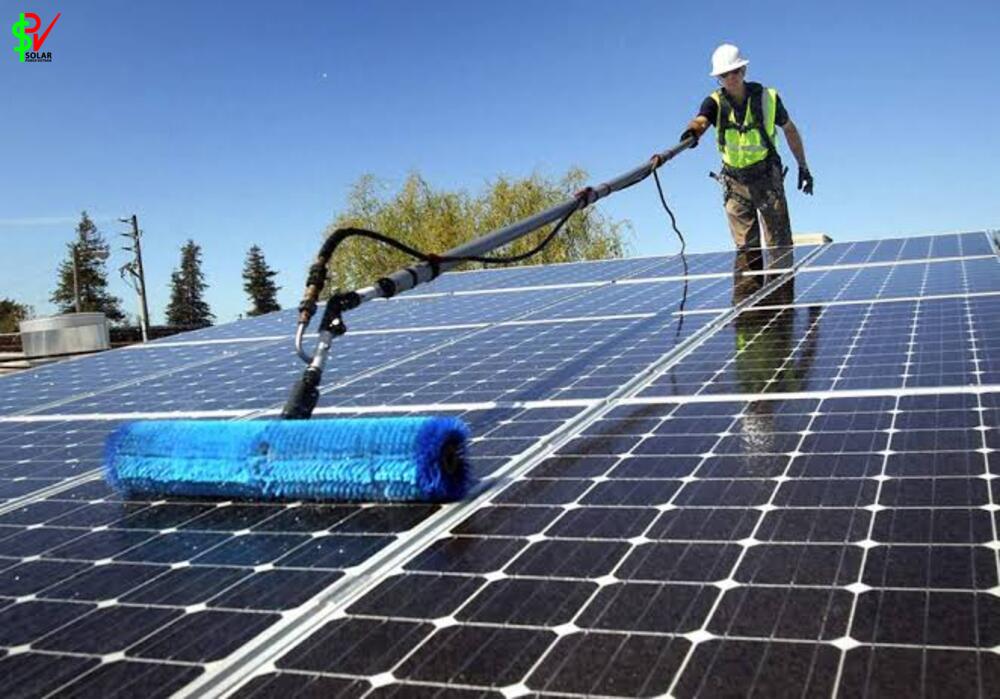
Solar panel maintenance
2. Guide to cleaning solar panels safely
Cleaning solar panels is the most important part of the maintenance process. However, using the wrong cleaning method may damage the protective glass or reduce the lifespan of the panels. Below is a detailed guide from professional engineers to help you clean solar panels safely at home.
The best time of day to clean solar panels
This is an extremely important rule: Only clean solar panels early in the morning (before 7 AM) or late in the afternoon (after 5 PM).
Why? At midday, solar panels absorb a large amount of heat and their surface temperature can reach 60°C – 70°C. If you spray cold water directly onto the hot glass surface, the sudden temperature change (called thermal shock) may crack the glass immediately. In addition, cleaning during cooler hours helps prevent water from evaporating too quickly and leaving water stains on the glass surface.
Tools you need before cleaning
You do not need expensive chemicals. The cleaning tools are very simple, including:
- Water hose: Use a normal household water hose with regular pressure. Never use a high-pressure car washer because strong water pressure may damage rubber seals or crack the panels.
- Soft sponge brush or glass wiper: Choose one with a long handle so you do not need to stretch too far. The brush head must be soft to avoid scratching the glass.
- Clean water: Only use tap water or clean groundwater. Do not use soap, dishwashing liquid, or strong chemicals because acidic or alkaline substances may damage the anti-reflective coating on the panel surface.
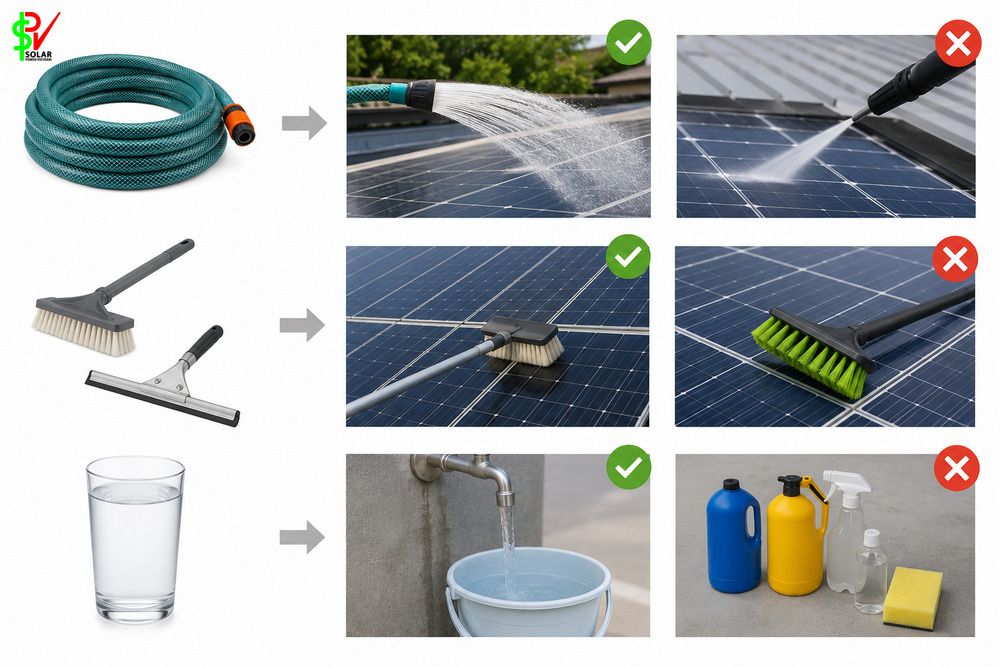
Tools you need before cleaning
Detailed cleaning steps
| Step | Detailed action | Purpose |
| Step 1: Turn off the power | Switch off the inverter and disconnect the circuit breaker. | Ensure complete safety and prevent electrical leakage during cleaning. |
| Step 2: Spray water first | Spray water evenly from top to bottom. | Wet the panels and remove loose dust first. |
| Step 3: Clean stubborn dirt | Use a soft sponge brush to gently clean stubborn stains such as bird droppings or tree sap. | Remove dirt that water alone cannot wash away. |
| Step 4: Final rinse and drying | Spray clean water one more time to remove all remaining dirt. | Let the panels dry naturally under sunlight before restarting the system. |
3. How long do solar panels last?
One reason why solar energy is considered a smart investment is the long lifespan of solar panels. When you understand their lifespan clearly, you will see that the initial investment is completely worthwhile.
The actual lifespan of solar panels
High-quality solar panels from trusted brands usually last between 25 and 30 years. This does not mean the panels completely stop working after 25 years. They still generate electricity, but the output gradually decreases compared to when they were brand new.
Natural performance degradation
Over time, semiconductor materials inside solar panels naturally age because of sunlight and heat exposure. However, the performance reduction is very small, averaging only around 0.5% per year.
For example, if a solar panel operates at 100% capacity during the first year, after 20 years it can still maintain around 80% to 85% of its original electricity production ability. This is a very impressive number compared to many other household electronic devices.
Tips to maximize solar panel lifespan
To help your solar system last 30 years or even longer, you should follow these 2 simple tips:
- Trim nearby tree branches: Do not allow large branches to create shadows over the solar panels. Long-term shading not only reduces electricity production but can also create “hotspots” that damage internal solar cells.
- Handle cracks immediately: If a hard object cracks the glass surface, contact technicians immediately for replacement or repair. If rainwater enters through the crack, the panel may become completely damaged very quickly.
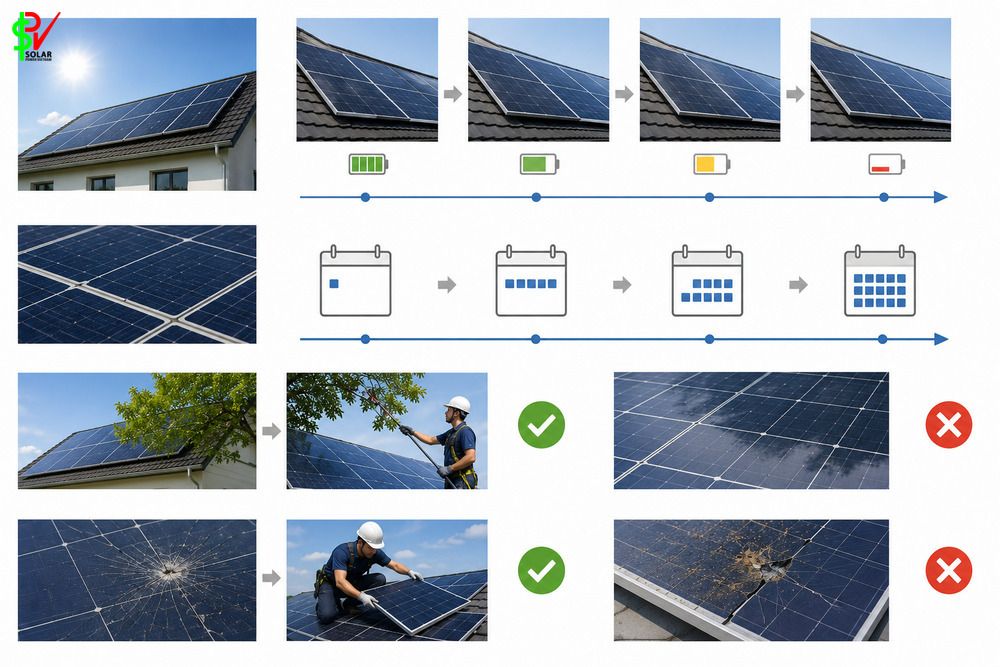
Solar panels last
4. Frequently asked questions (FAQ)
During the use and maintenance of solar power systems, homeowners usually have many similar questions. Below are simple and direct answers for you:
Question 1: Can I clean solar panels by myself, or do I need professional cleaning services?
Answer: It completely depends on your roof condition. If your home has a flat concrete roof or a low metal roof with safe walking space, you can clean the panels yourself using soft cleaning tools to save money.
However, if your home has a steep tiled roof, a tall building without safe access, or panels installed in dangerous locations, never climb up by yourself. Professional cleaning teams have proper safety belts, scaffolding, and specialized equipment. Personal safety should always come first.
Question 2: How many times should I clean solar panels each year?
Answer: Normally, in areas with clear rainy and dry seasons, cleaning solar panels once or twice a year is enough.
However, if your home is near busy roads with heavy traffic, factories with smoke and dust, or during long dry seasons without rain, dust may build up much faster. In this case, you should monitor the system through the mobile app. If electricity production decreases noticeably, you should clean the panels sooner.
Question 3: Can rainwater clean solar panels naturally?
Answer: Rainwater helps, but it only removes part of the dust.
Heavy rain can wash away loose dirt on the panel surface, making the panels temporarily cleaner. However, rainwater cannot remove stubborn stains such as bird droppings, dried tree sap, or mud buildup near the lower edge of the panels where rainwater collects. Therefore, manual cleaning with a soft brush is still necessary regularly.
Question 4: Can I walk or step on solar panels while cleaning them?
Answer: Absolutely not.
Many people think the tempered glass surface looks strong enough to step on. In reality, the weight of an adult can create tiny invisible cracks, called micro-cracks, inside the silicon cells under the glass surface. These cracks may reduce power generation and eventually damage the panels completely.
In addition, stepping on solar panels may void the manufacturer’s warranty.
Question 5: What should I do if a solar panel cracks after a big storm?
Answer: The first thing you should do is immediately switch off the circuit breaker connected to the inverter to stop the system.
Then contact your installation company or a professional technician for inspection. Never continue operating the system when a panel is cracked. Rainwater can enter through the crack and cause electrical leakage, short circuits, or fire hazards. It may also damage the expensive inverter inside your home.
Regular solar panel maintenance helps your solar power system operate safely and efficiently for many years. By cleaning and inspecting the panels once or twice a year, you can improve electricity output and extend solar panel lifespan. A well-maintained system can continue generating clean energy for over 30 years. Solar Power Vietnam recommends setting a regular cleaning schedule to keep your rooftop solar power system performing at its best.