Jul
News
Average Cost Of Solar Panels: How Much Does Residential Solar Installation Cost?
Installing solar energy is no longer as expensive as many homeowners think. In recent years, the average cost of solar panels has become more affordable thanks to better technology and lower equipment prices. However, the total investment still depends on factors such as roof size, electricity usage, equipment quality, and battery storage options. Besides solar panel prices, the overall solar installation cost also includes inverters, mounting systems, wiring, and labor. In this guide, Solar Power Vietnam will help you understand the most important costs before installing a solar system for your home.
1. What is the average cost of solar panels today?
The average cost of solar panels in Vietnam is usually calculated based on system size, measured in kilowatts peak (kWp). In 2026, residential rooftop solar systems typically cost around 9–18 million VND per kWp depending on equipment quality and whether the system includes battery storage.
Below is a general pricing overview for residential solar systems in Vietnam.
| System size | Suitable for | Estimated monthly electricity bill | Estimated installation cost |
| 3kW – 5kW | Small homes, townhouses | Under 1.5–2 million VND | Around 45–90 million VND |
| 6kW – 10kW | Medium to large households | Around 2–4 million VND | Around 90–170 million VND |
| Above 10kW | Villas, home businesses | High electricity consumption | 170 million VND and above |
These prices usually include:
- Solar panels
- Inverter
- Mounting structure
- Electrical cabinet
- Wiring system
- Standard installation labor
However, battery storage systems are normally priced separately because lithium batteries remain one of the most expensive parts of a solar installation.
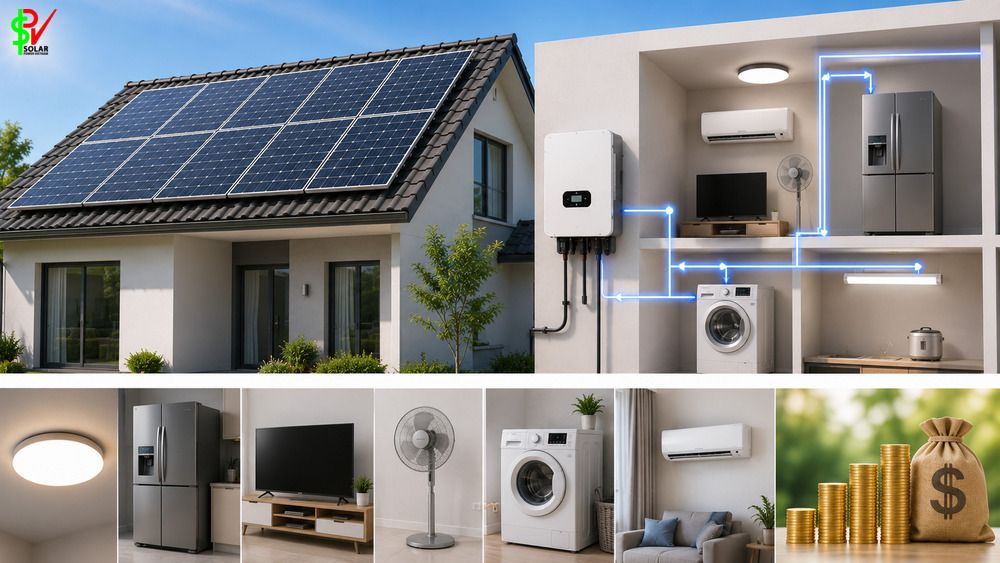
Small systems (3kW – 5kW)
Small solar systems are suitable for homeowners who want to reduce electricity bills without making a very large investment.
This setup can normally support:
- Lighting systems
- Refrigerators
- Televisions
- Fans
- Washing machines
- Several daytime air conditioners
A 5kW system is one of the most popular residential choices in Vietnam because it balances affordability and electricity savings well.
According to recent market data, a complete 5kW residential system in Vietnam usually costs around 65–90 million VND depending on equipment quality.
Medium systems (6kW – 10kW)
Medium-sized systems are common for families with higher electricity consumption.
Homes that use:
- Multiple air conditioners
- Electric water heaters
- Home office equipment
- Continuous daytime appliances
often benefit most from systems in this range.
Although the upfront investment is higher, these systems can significantly reduce monthly electricity costs and improve long-term energy independence.
A complete 10kW residential system in Vietnam currently ranges from approximately 90–170 million VND for on-grid systems, while hybrid systems with battery storage can exceed 200 million VND.
Large systems (Above 10kW)
Large solar systems are typically installed for:
- Villas
- Combined home-business models
- Cafés and offices
- Homes with very high electricity demand
One important advantage of larger systems is lower cost per watt.
In simple terms:
- Small systems have a higher price per watt
- Larger systems usually become more cost-efficient
This happens because labor, transportation, and technical setup costs are distributed across a larger electricity output.
Average cost of solar panels today
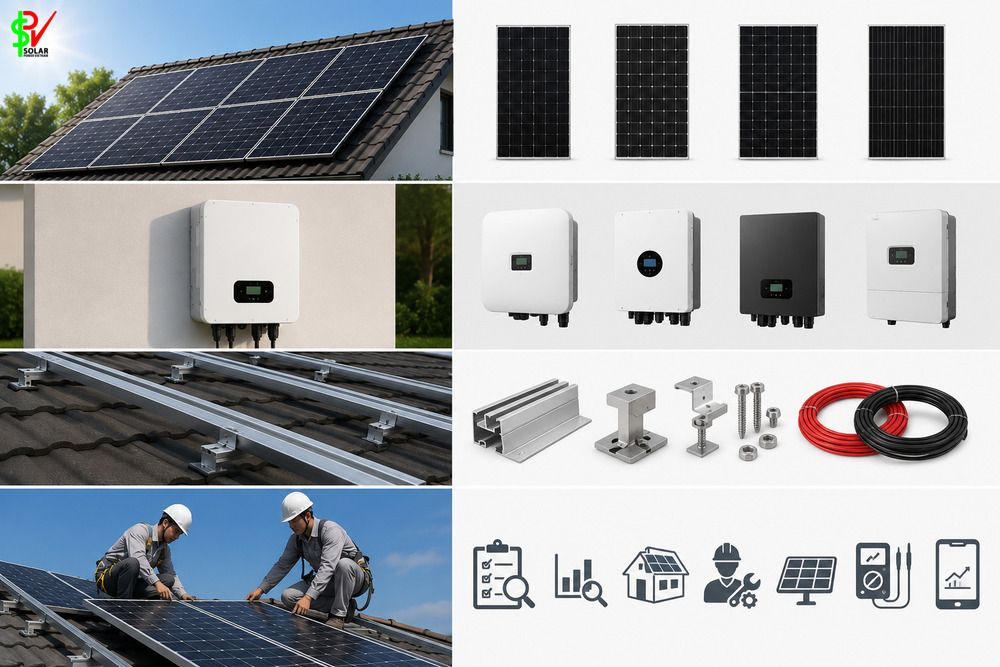
2. What is included in the total solar installation cost?
Many homeowners assume solar installation only involves buying solar panels. In reality, a complete solar energy system includes several important components working together.
Understanding these costs helps homeowners compare quotations more accurately and avoid misleading low-price advertisements.
Solar panel prices
Solar panels usually account for around 30–40% of the total installation cost.
Today, most professional residential systems use mono solar panels because they provide:
- Higher efficiency
- Better performance in hot weather
- Longer lifespan
- Better electricity generation in limited roof areas
Popular Tier-1 panel brands commonly installed in Vietnam include:
- Longi
- JA Solar
- Jinko Solar
- Canadian Solar
Higher-quality panels may cost more initially, but they often provide more stable long-term performance over 25 years or longer.
Inverter cost
The inverter is responsible for converting DC electricity from solar panels into AC electricity for household appliances.
Without an inverter, the solar system cannot power home devices.
Homeowners usually choose between:
- On-grid inverters
- Hybrid inverters
On-grid systems are cheaper because they do not include battery storage. Hybrid systems cost more but can continue supplying electricity during blackouts.
Well-known inverter brands in Vietnam include:
- Growatt
- Sungrow
- Huawei
- SMA
The inverter quality directly affects system efficiency, monitoring capability, and long-term reliability.
Mounting structure and wiring system
A safe solar system requires durable mounting frames and professional electrical wiring.
The mounting structure must withstand:
- Heavy rain
- Strong wind
- Long-term outdoor heat
- Roof movement over time
Installers often use:
- Aluminum rails
- Galvanized steel structures
- Stainless steel fasteners
Electrical protection systems are also essential for reducing fire risks and improving safety.
Installation labor cost
Professional installation services usually include:
- Roof inspection
- Electricity usage analysis
- System design
- Safety setup
- Rooftop installation
- Electrical testing
- Mobile monitoring configuration
Experienced installers help ensure the system operates efficiently and safely for decades.
This is one reason why choosing the cheapest installer can sometimes become risky in the long term.
Total solar installation cost
3. What factors can increase or reduce solar installation cost?
The final solar installation cost can vary significantly from one house to another. Several technical and structural conditions directly affect pricing.
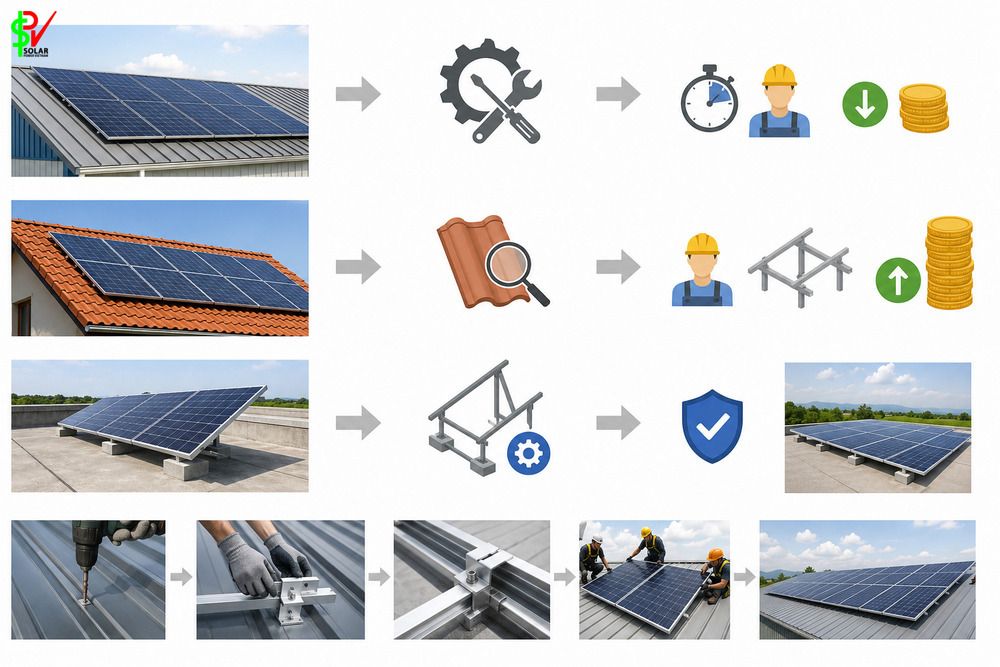
Roof type and roof structure
Roof design plays a major role in installation difficulty.
Metal roofs
Metal roofs are usually:
- Easier to install on
- Faster for technicians
- Lower in labor cost
This is why factories and warehouses often install solar systems more quickly.
Tile roofs: Tile roofs require more careful installation techniques to avoid damaging the roof material.
This increases:
- Labor time
- Structural complexity
- Installation cost
Concrete roofs: Concrete roofs may require customized mounting structures and additional engineering work. Although installation can cost slightly more, concrete roofs usually provide excellent long-term stability.
Roof type and roof structure
Roof shading conditions
Solar panels work best under direct sunlight. If part of the roof is blocked by:
- Trees
- Nearby buildings
- Water tanks
- Utility poles
Installers may recommend additional optimization devices. These technologies help prevent one shaded panel from reducing the output of the entire system. However, extra optimization equipment also increases project cost.
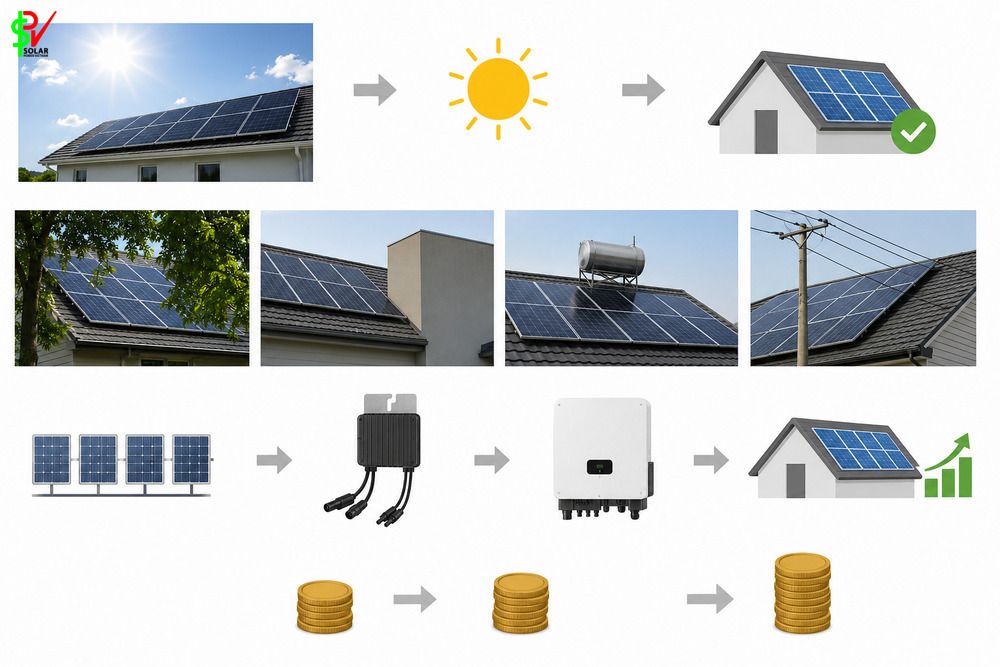
Roof shading conditions
Equipment quality and warranty
Lower-cost systems often use cheaper materials with shorter warranties. Professional solar companies usually provide:
- Genuine equipment
- Technical warranties
- Roof leakage warranties
- Long-term maintenance support
- Certified installation standards
Premium systems may cost more initially, but they generally provide better reliability and safety over time.
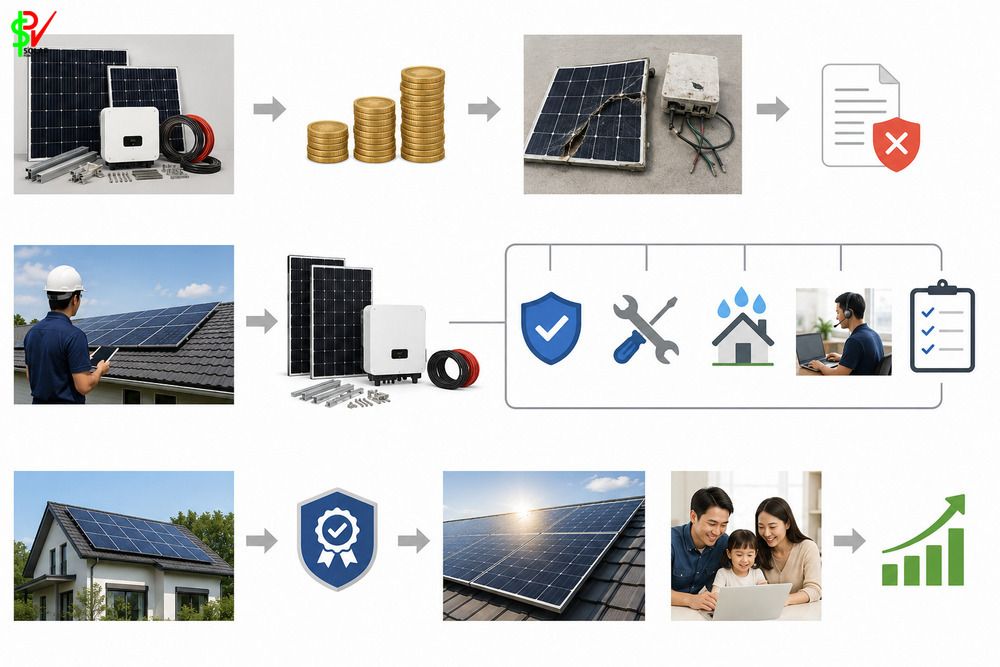
Equipment quality and warranty
4. Can solar panels really help save money?
For many families, solar energy is no longer just an environmental solution. It has become a long-term financial investment.
Fast payback period: In southern Vietnam, many residential systems can recover their investment within approximately 4–6 years depending on electricity usage and sunlight conditions. After the payback period, homeowners can continue using solar electricity for nearly 20 more years with very low operating costs.
Protection against rising electricity prices: Electricity prices continue increasing over time. Solar energy helps homeowners reduce dependence on the national grid and stabilize long-term energy expenses. This becomes especially valuable for households with heavy daytime electricity usage.
Increased property value: Homes with professionally installed solar systems are often more attractive in the real estate market. Potential buyers appreciate.
- Lower electricity bills
- Energy independence
- Modern infrastructure
- Long-term operating savings
As a result, solar-equipped homes may sell faster and at higher prices.
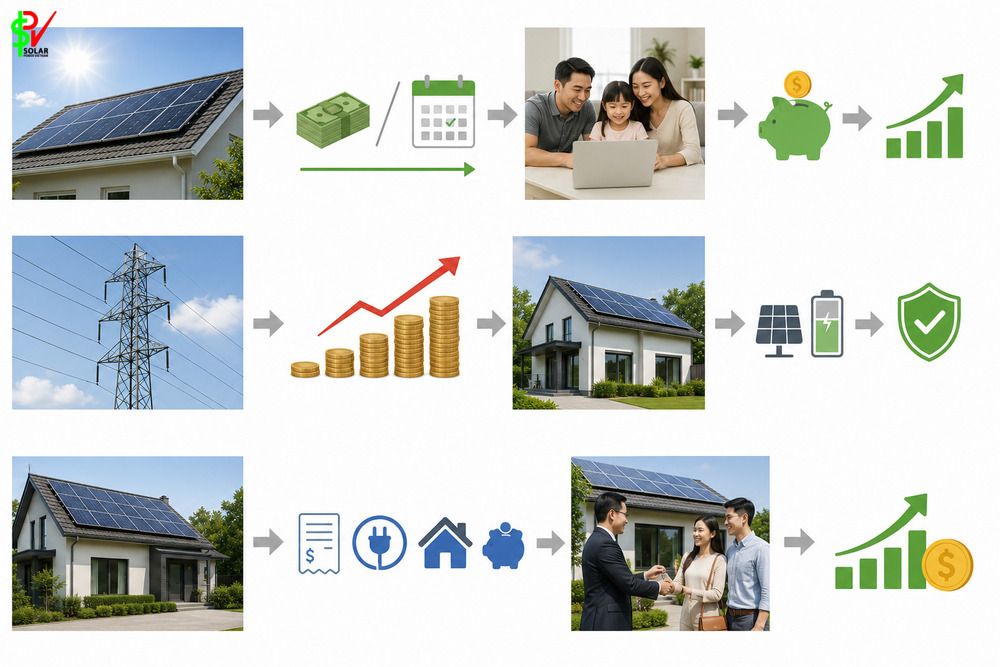
Solar-equipped homes may sell faster and at higher prices
5. Frequently asked questions (FAQ)
Question 1: Why are solar panel prices online much cheaper than full installation quotes?
Online prices usually only show the retail cost of individual solar panels.
A complete solar system also requires:
- Inverter
- Mounting structure
- Electrical cabinet
- Wiring system
- Safety equipment
- Professional installation labor
These additional components are necessary for safe and reliable operation.
Question 2: How can I estimate how much do solar panels cost for my own home?
The easiest way is to check your highest monthly electricity bill. Solar technicians can analyze your electricity consumption and estimate:
- Recommended system size
- Required roof area
- Estimated electricity generation
- Approximate installation budget
This provides a much more accurate cost estimate for your specific home.
Question 3: Should I choose the cheapest solar installation cost available?
Not always. Solar systems remain on rooftops for more than 20 years, so installation quality is extremely important. Very cheap installation services may use:
- Low-quality wiring
- Weak mounting structures
- Unsafe installation methods
This can increase the risk of electrical failures or roof leakage later.
Question 4: Is annual maintenance expensive?
No. Solar systems generally require very little maintenance because they contain few moving parts. Most homeowners only need:
- Annual inspections
- Basic cleaning
- Occasional maintenance checks
Rainwater itself often helps clean dust naturally from the panel surface.
Question 5: If I want battery storage later, will costs increase significantly?
Lithium battery systems are still relatively expensive today. However, homeowners can prepare for future upgrades by installing a hybrid inverter from the beginning. Later, battery storage can be added more easily without rebuilding the entire solar system.
Although the upfront investment may seem expensive at first, solar energy remains one of the smartest long-term financial solutions for homeowners. A properly designed system can reduce electricity bills, improve property value, and provide stable electricity for more than 25 years. Instead of focusing only on the cheapest solar installation cost, homeowners should prioritize equipment quality, safety, and professional installation standards. For the most accurate quotation and system design, Solar Power Vietnam recommends working with trusted solar experts who can evaluate your roof structure and electricity usage carefully.