Jun
News
What Is A Solar Inverter? A Guide To Choosing The Right Inverter For Your Home
In every solar energy system, the solar inverter is one of the most important components because it controls how electricity is converted and used inside the home. While solar panels generate electricity from sunlight, the inverter makes that electricity safe and usable for daily appliances such as televisions, refrigerators, air conditioners, and lighting systems. Depending on your electricity needs, you can choose an on grid solar inverter for cost savings or a hybrid solar inverter for backup power during blackouts. In this guide, Solar Power Vietnam will help you understand how a solar inverter works and how to choose the best solution for your household.
1. What is a solar inverter and how does it work?
Before installing a solar power system, homeowners should understand the role of a solar inverter. This device is considered the “brain” of the system because it controls how electricity is converted and used inside the home.
How does a solar inverter work?
Solar panels generate direct current (DC) electricity when exposed to sunlight. However, household appliances such as televisions, refrigerators, and air conditioners use alternating current (AC) electricity at 220V.
A solar inverter converts DC electricity from the solar panels into usable AC electricity for daily household use. Without this conversion process, the electricity generated by the panels cannot power home appliances.
Why is the inverter important?
Besides converting electricity, modern solar inverter systems also help:
- Monitor electricity production
- Protect the system from overload
- Detect technical problems
- Improve energy efficiency
- Connect to smartphone monitoring applications
A high-quality inverter reduces electricity loss during conversion, helping homeowners save more money and improve overall system performance.
Because it manages electricity conversion, system safety, and energy control, the solar inverter is often called the central control unit of a residential solar power system.
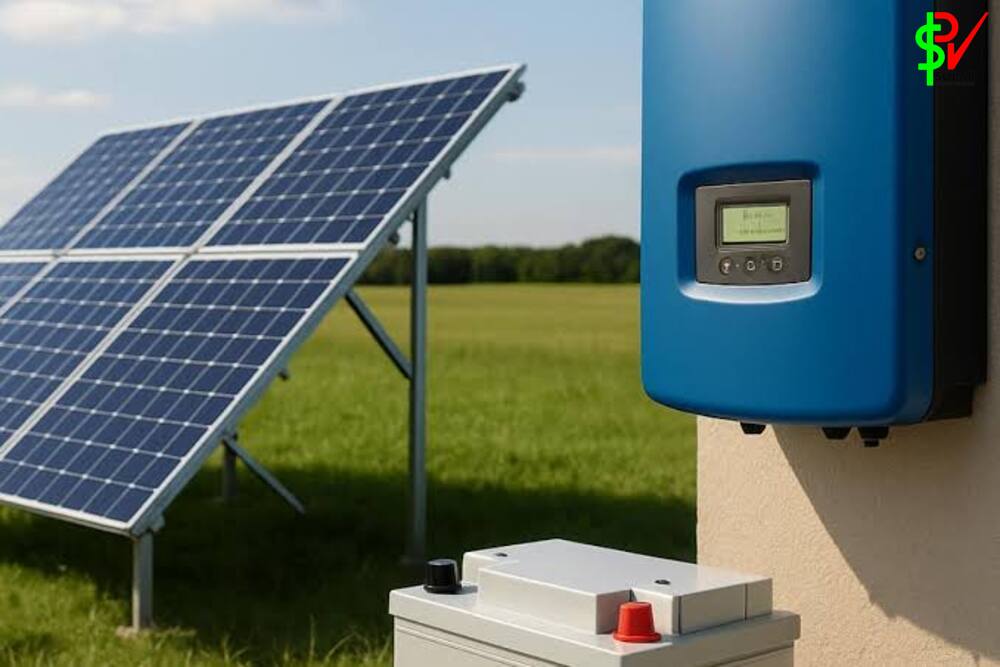
Solar inverter
2. Comparing the two most popular types of solar inverters for homes
Today, homeowners usually choose between two main types of solar inverter systems: on grid solar inverter and hybrid solar inverter. Each option is designed for different electricity needs and budgets.The right choice depends mainly on whether your family needs battery storage and backup electricity during power outages.
On grid solar inverter
An on grid solar inverter is the most popular choice for residential solar systems because it is affordable, simple, and reliable. This type of inverter only works when connected to the national power grid.
During the day, solar panels generate electricity and the inverter converts it into AC power for household appliances. If the system creates excess electricity, the unused energy may be exported or automatically reduced depending on the setup.
Advantages
- Lower installation cost
- Simple system setup
- Fast installation process
- Stable and durable performance
- Minimal maintenance required
This solution is ideal for homes in areas with stable electricity.
Disadvantages
When the national grid loses power, the inverter automatically shuts down for safety reasons. This means the house will also lose electricity even if the solar panels are still producing power.
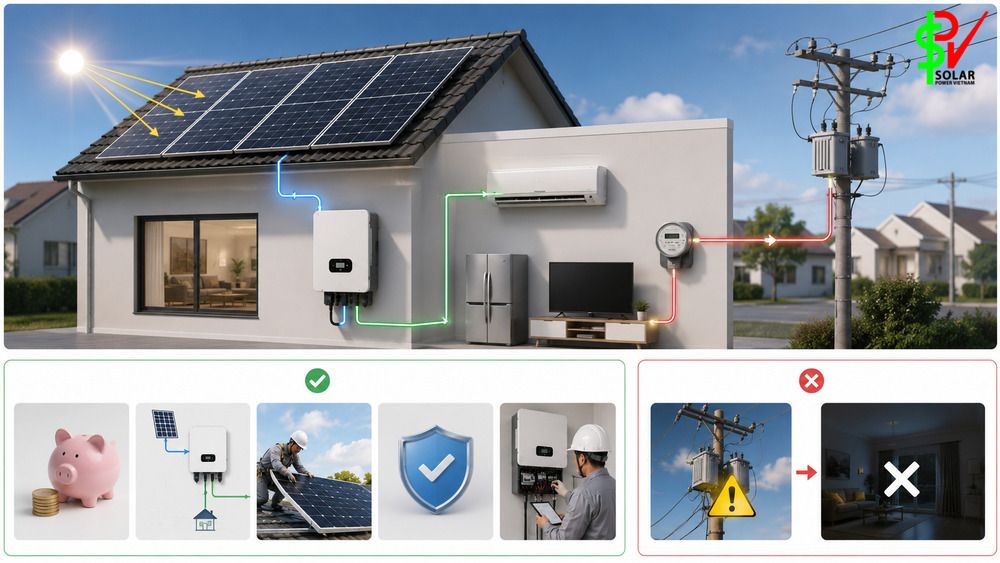
On grid solar inverter
Hybrid solar inverter
A hybrid solar inverter combines solar power generation with battery storage technology. It can use electricity from solar panels, the national grid, and stored battery energy at the same time.
During the daytime, excess solar electricity charges the battery system after supplying power to household appliances. At night or during blackouts, the inverter automatically switches to battery power to keep the home running.
Advantages
- Backup electricity during power outages
- Better energy independence
- Ability to store excess solar energy
- Continuous power for important devices
- More efficient use of solar electricity
This option is suitable for homes that experience frequent blackouts or require stable electricity for devices such as refrigerators, internet systems, or security cameras.
Disadvantages
The main drawback is the higher investment cost. Because the system includes battery storage and advanced inverter technology, the total installation cost is significantly more expensive than an on grid solar inverter.
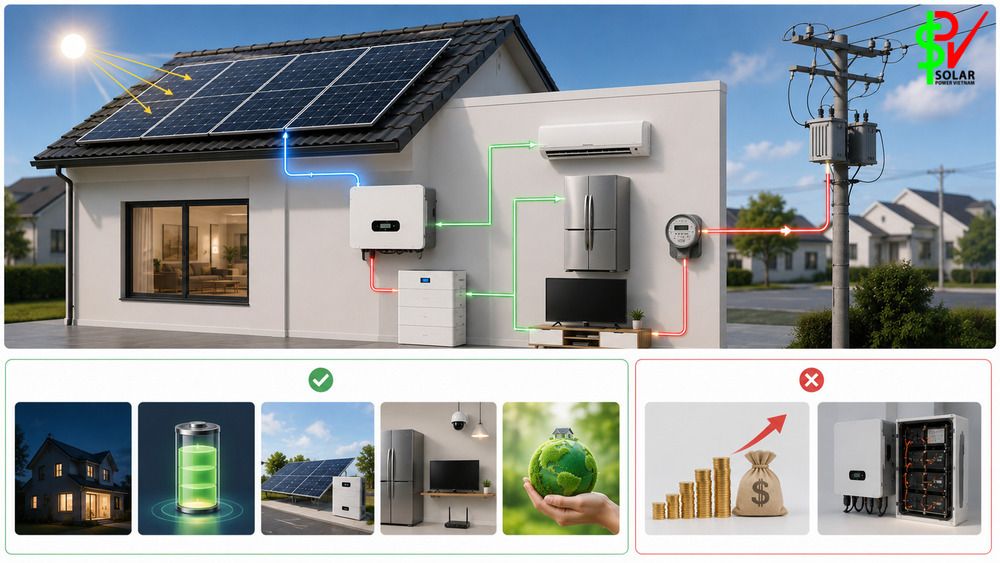
Hybrid solar inverter
3. Criteria for choosing the best solar inverter for your home
Choosing the best solar inverter requires more than simply comparing prices. Homeowners should carefully evaluate technical specifications, efficiency levels, warranty support, and future energy needs before making a final decision.
A properly selected inverter can improve system performance, increase long-term savings, and reduce technical problems over time.
Choose the correct capacity
One of the most important factors is inverter capacity. The inverter should match the total output capacity of the solar panel system.
For example, if your rooftop solar system has a total capacity of 5kW, a 5kW inverter is usually the most suitable choice. An inverter that is too small may not handle the electricity generated by the panels efficiently. On the other hand, an oversized inverter may increase unnecessary costs without providing additional benefits.
Professional consultation from Solar Power Vietnam can help homeowners calculate the ideal inverter size based on electricity consumption, roof area, and future energy needs.
Prioritize high conversion efficiency
Efficiency is another critical factor when selecting a solar inverter. Higher efficiency means the inverter loses less electricity during the conversion process.
Experts generally recommend choosing inverter models with efficiency ratings above 97%. Although high-efficiency models may cost more initially, they usually provide better long-term savings because more solar electricity can be used inside the home.
A high-efficiency inverter also performs better during hot weather and heavy electricity demand.
Choose trusted brands with official warranties
Because the inverter operates continuously every day, equipment quality and warranty support are extremely important.
Homeowners should prioritize trusted brands that provide:
- Official warranty coverage
- Technical support in Vietnam
- Certified installation partners
- Genuine replacement parts
- Reliable after-sales service
Most quality inverter brands offer warranties ranging from 5 to 10 years depending on the product model.
Choosing a trusted supplier reduces the risk of technical failures and improves long-term system reliability.
Consider smart monitoring features
Modern solar inverter systems now include advanced monitoring technologies that allow homeowners to track system performance directly from a smartphone application.
These features help users:
- Monitor daily electricity generation
- Track household energy usage
- Receive fault notifications instantly
- Check system performance remotely
- Detect problems early before major damage occurs
This technology makes system management easier and more convenient for homeowners.
Think about future expansion
Many families plan to expand their solar systems in the future by adding more panels, battery storage, or electric vehicle charging systems.
Choosing an inverter that supports future upgrades can save both time and money later. A flexible inverter system also allows homeowners to adapt more easily as electricity usage increases over time.
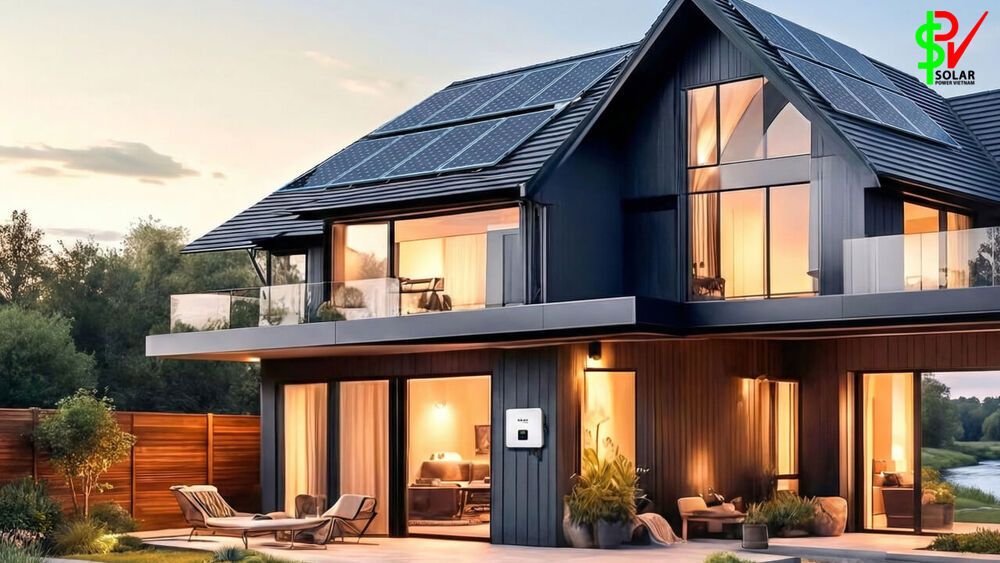
Criteria for choosing the best solar inverter for your home
4. Frequently asked questions (FAQ)
Before investing in a solar inverter, many homeowners have questions about performance, installation, and long-term reliability. Below are some of the most common concerns.
Question 1: Should I choose an on grid solar inverter or a hybrid solar inverter?
If your area has stable electricity and your main goal is reducing daytime electricity bills, an on grid solar inverter is usually the most economical choice. However, if your home experiences frequent blackouts or requires uninterrupted electricity for important equipment, a hybrid solar inverter is the better long-term solution.
Question 2: Where is the best place in the house to install a solar inverter?
The inverter should be installed in a cool, dry, and well-ventilated location away from direct sunlight and rain exposure. Common installation areas include covered patios, technical rooms, storage rooms, or garages.
Keeping the inverter cool helps improve efficiency and extend equipment lifespan.
Question 3: Does the inverter make loud noise during operation?
Most modern residential inverter systems operate very quietly. Many models use natural cooling systems or intelligent cooling fans that produce minimal noise.
Under normal operating conditions, the sound level is very soft and does not affect daily household activities.
Question 4: How can I know if my solar inverter is operating properly?
Most modern inverter systems include LED indicators, display screens, or mobile applications that allow homeowners to monitor performance easily.
Through the application, users can check:
- Daily electricity generation
- System operating status
- Error notifications
- Electricity consumption trends
If the system experiences a technical problem, the application usually sends an instant notification directly to the user’s phone.
Question 5: What is the average lifespan of a solar inverter?
A solar inverter usually lasts around 10 to 15 years because it continuously converts electricity during daily operation.
Its lifespan depends on several factors, including:
- Installation quality
- Ventilation conditions
- Equipment quality
- Weather exposure
- Operating workload
With proper installation and maintenance, a high-quality inverter can operate reliably for many years.
A solar inverter is one of the most important components in any residential solar energy system because it controls how electricity is converted, managed, and supplied inside the home. Even high-quality solar panels cannot perform effectively without a reliable inverter. Choosing the right inverter improves safety, energy efficiency, and long-term system performance. For the best results, homeowners should invest in genuine equipment with professional installation and official warranty support from trusted providers like Solar Power Vietnam.